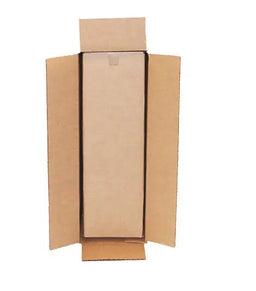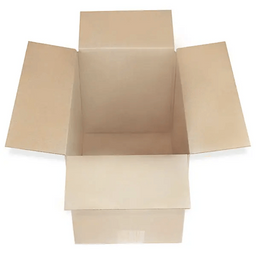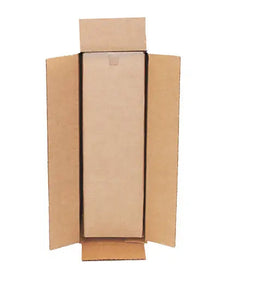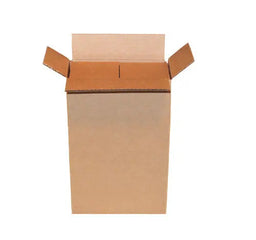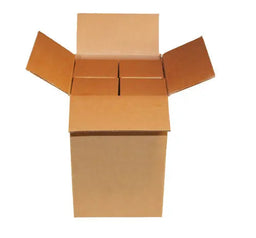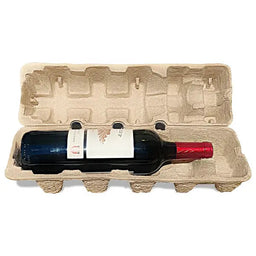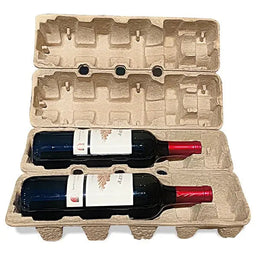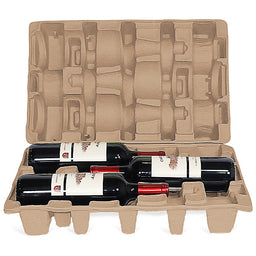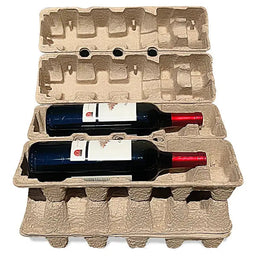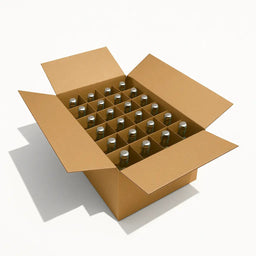



Craft distilleries shipping spirits direct-to-consumer face the same fundamental challenge as wineries: glass bottles that must survive the UPS and FedEx ground network without breaking. The packaging principles are nearly identical, with a few important differences specific to spirits.
Spirits packaging needs to account for several bottle characteristics that differ from wine:
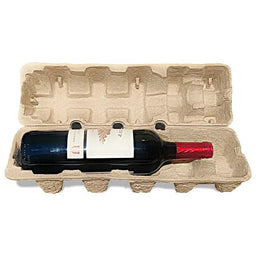
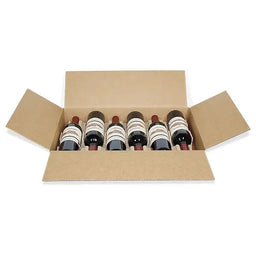
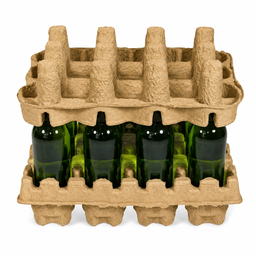
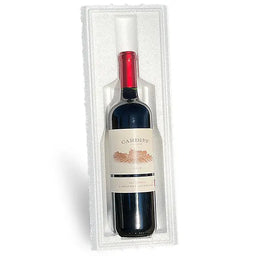
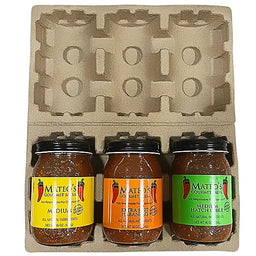
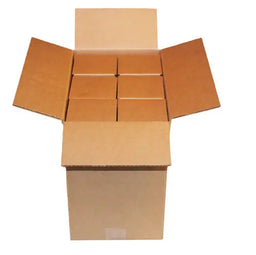
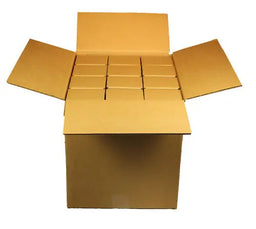
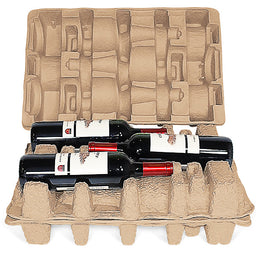
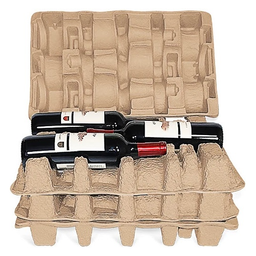
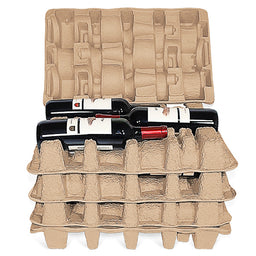
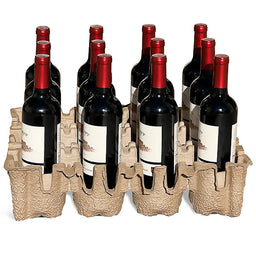
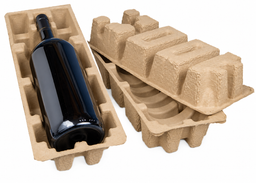
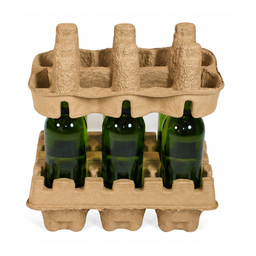
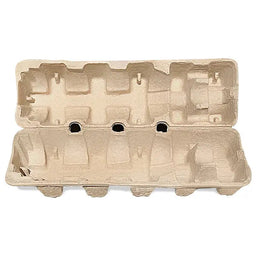
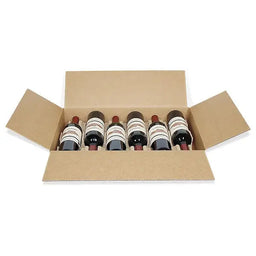
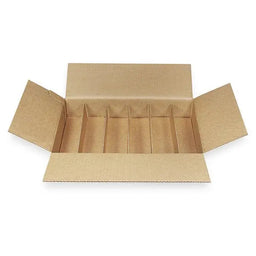
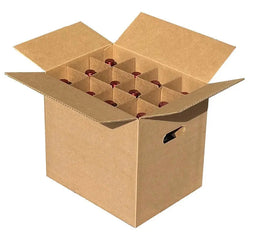
Many standard spirits bottles — particularly those in a roughly cylindrical wine-bottle profile — fit well in wine-format molded pulp shippers. This is especially true for:
Always request samples and test fit before ordering in quantity — bottle dimensions vary significantly by distillery and product.
For spirits with irregular bottle shapes (square bottles, wide-shoulder designs, heavily embossed bottles), custom die-cut foam inserts sized to your specific bottle provide the best protection. Higher minimum orders but optimal fit.
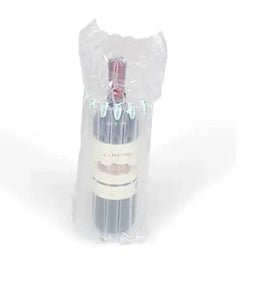
Inflatable bottle packaging works for irregular shapes and provides reasonable protection. Less optimal than purpose-built inserts but more flexible for varied bottle profiles.
Spirits shipping has similar carrier requirements to wine, with some important differences:
Spirits bottles under pressure (carbonated spirits) or with cork closures need extra attention to prevent leakage in transit:
Direct-to-consumer spirits shipping is a growing channel for craft distilleries. Limited releases, single barrel selections, and distillery exclusives create compelling reasons for consumers to buy direct. Distilleries that build a reliable DTC shipping operation — with protective packaging that delivers bottles intact — build loyal direct customers that generate better margins than wholesale.
WineShippingBoxes.com supplies craft distilleries alongside wineries. Many standard spirits bottles fit our molded pulp wine shipper configurations. Request samples to test your specific bottle dimensions — low minimums mean you can start without significant upfront investment.